
You’re unknowingly compensating for every pain, injury, surgery, and, if the shoe fits, pregnancy and giving birth to a child.
Do you feel pain and tight muscles that no amount of stretching, foam rolling, rolling on a lacrosse ball, and actively releasing muscles with deep tissue massage has been unable to solve for longer than 24 hours?
The vast majority of practitioners deemed qualified to work with your muscular and skeletal systems don’t have the skill set to differentiate tight muscles from those that are underperforming (neurologically inhibited).As a result, and through no fault of your own, you have muscle imbalances that have gone unaddressed for far too long.

Besides teaching kinesiology, the study of human movement for 15 years, I’ve held a massage therapy license for 31 years, and for most of my career, I’ve ignored tight muscles (and I think you should, too!).
Since serving as the biomechanics consultant and sports massage therapist at ESPN, where I worked with sports– and work-related injuries, I have devoted considerable time, energy, and attention to developing an approach that addresses the root cause of pain, improves performance, and prevents injuries before they occur.I wrote the foreword for the 1st edition of Joseph Muscolino’s Kinesiology textbook. I’ve also been quoted in Runner’s World UK, Massage & Bodywork, and Massage Magazine.
I’m a member of the ABMP (Associated Bodywork & Massage Professionals) and the AMTA (American Massage Therapy Association).

You don’t have to be a professional athlete to function better and prevent injuries.
It’s Not Too Late to Think DifferentlyYou can feel when muscles are tight. But you can’t feel when muscles are underperforming.
To do that, look no further than what’s occurring beyond your conscious awareness: underperforming muscles are neurologically unable to perform their role to the best of their ability, causing instability and, as a result, muscle tightness.
Until the underperforming muscles are fully capable of playing their role to the best of their ability, your brain will do what it’s hardwired to do—respond to the threat of instability with tight muscles.
With more than three decades of hands-on experience and, more importantly, the skill set to identify which muscles are underperforming, I pinpoint the muscles that will yield the best results in every session.Releasing muscles with deep tissue massage has you functioning like a Slinky, whereas deep tissue massage targeting tendons confirmed to be underperforming has your muscles responding like springs.
To get to the root cause of pain, tight muscles, and compensation that’s accumulated over your lifetime, schedule your first session today!
• Jump to how to work with me online
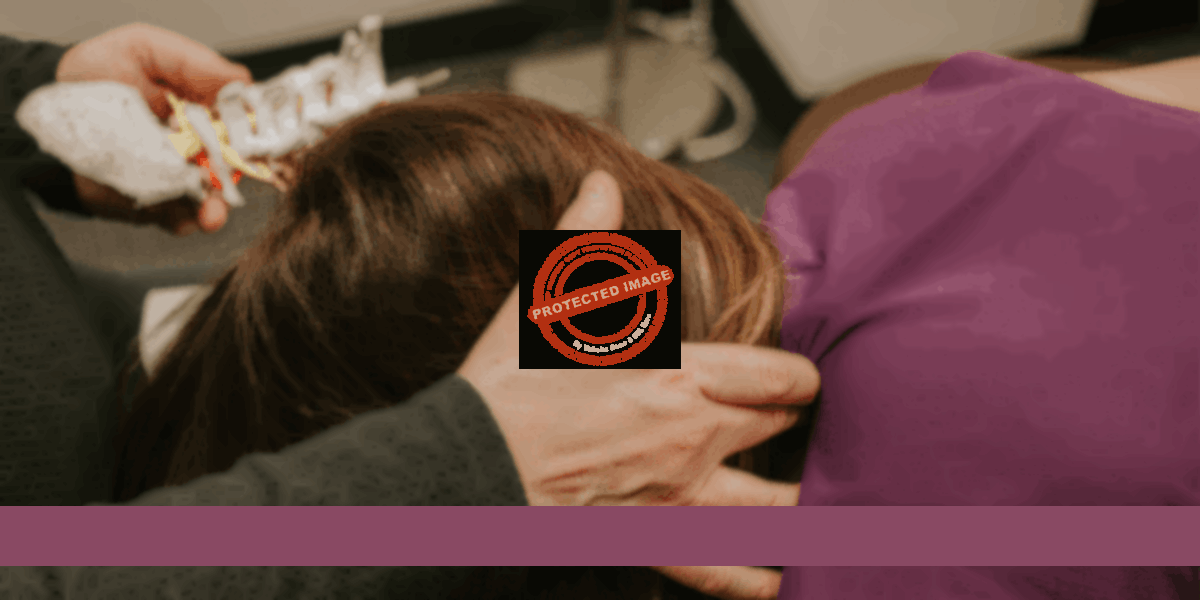
When Common-Knowledge Exercises Aren’t Enough
It’s one thing for practitioners deemed qualified to work with your muscular and skeletal systems to understand human movement.But it’s a whole other thing to figure out how your history of compensation (muscle imbalances) plays out differently than the ten people who walked through the door before you (hint, hint).
When underperforming muscles aren’t identified and addressed in a way that has them dialed in and firing at the right speed, those muscles are unable to play their role to the best of their ability, making it impossible for them to get stronger with one-size-fits-all common-knowledge exercises.The common-knowledge exercises and age-old run-of-the-mill stretches that have been said to be therapeutic for decades have, in reality, increased compensation and fragility.
It’s this lack of specificity that has forced countless people, who didn’t know what they didn’t know, to undergo surgeries they could have avoided!
Most Recent Video
Knee pain? Your quadriceps femoris consists of muscles that physical therapists miss.
Hands Down, The Best Deep Tissue Massage in Dallas, TX Reviews (Without Question!)
He’s an expert—likely the top 1% of his profession. — Jon
I haven’t been to the chiropractor in nine months, and I canceled my shot. My husband is thrilled that he doesn’t have to watch me stretch in front of the TV anymore. Thank you, Rick! — Sheryl
Rick’s technique is not a regular massage, and his knowledge of the body, mechanics, and muscle attachment/anatomy is doctoral. — Adrienne
Much like Leonardo’s quest to understand human movement in a time when it was decidedly unpopular, Rick Merriam has taken the time to understand how we move and how to apply a massage technique to muscle attachments when those patterns go amiss.Having shed tears of joy and pain, I settled into my airplane seat, understanding I was forever changed. — Barbara
Rick’s depth of knowledge and expertise are what set him apart! — Pranay
I haven’t felt how I feel today in 30 years, and I have Rick Merriam to thank for that! — Drew
Rick overdelivers! — Keith
Even though I was skeptical that anyone could restore stability and improve function, I was willing to try anything. So, four days before my race, I went to Rick. The first thing Rick noticed was that I was wearing the wrong type of shoe for my foot and the way I walk. He recommended a better shoe, which I purchased that day.
Rick worked with me for two hours, and I could not believe the difference he made in such a short time. I went from hobbling after painfully finishing 3 miles to easily running 10 miles. — Deidra
A friend sent mean article on plantar fasciitis that Rick wrote. It blew my mind and gave me hope. We had three sessions in total. The payoff: I don’t feel that horrible foot pain anymore, and I can walk barefoot around the house. — Misty
I had a full travel day on Wednesday, and as I was walking up the jetway, I realized that I had spent several hours walking and sitting at airports and on airplanes with ZERO sciatic pain! — Craig
The squeeze is worth the juice! — WalterPost-Surgery Recovery Specific Reviews
* * * * *I suffered a severe injury a few years ago, and surgery, rehab, chiropractic, and ART [Active Release Technique] didn’t help. But then I found Rick, and I was able to start exercising again.
— Russ
Rick got me back to feeling normal again after my hip replacement and, more recently, post-shoulder surgery. — Liz
• Jump to the two most important questions to ask your practitioner• Jump to FAQ
• Jump to address and airports
Ignoring underperforming muscles and compensation as if they don’t exist has led to countless surgeries that could have been avoided!
Your Musculoskeletal Health Depends on The Answers to These Two Questions
The next time a practitioner who specializes in your musculoskeletal system tells you that muscle tightness or scar tissue is the reason you’re experiencing pain, ask them, “Can you identify the muscles that are underperforming?“When you’re told you have tight quadriceps (quads), a group of powerful muscles located throughout the front of your thigh that play a crucial role in leg movement, enabling your knee to straighten, ask them, Which one of my four quads is tight?
After you ask either one of these questions, watch for the blank stare.75% of your muscles attach to your pelvis.
And the vast majority of practitioners don’t have the skill set to differentiate tight muscles from muscles that are underperforming.

The tightness you feel at the end of the day is due to muscles compensating for the stability that the underperforming muscles in your neck and upper back are neurologically incapable of providing.
As you go through your day, muscles throughout your upper back and between your shoulder blades gradually fatigue.
Even though what you feel registers as muscle tightness, what you’re experiencing is underperforming muscles that are unable to contract optimally to maintain postural control.
When your muscles are fully capable of playing their role to the best of their ability, your brain, which is hardwired to protect, recognizes that it’s no longer tasked with the energy expenditure required to compensate for instability with muscle tightness.
The tight muscles relax because they no longer have to compensate for the stability that the underperforming muscles were unable to provide.
If you can wrap your head around why it’s worth ignoring tight muscles and instead improving the underperforming muscles’ ability to provide stability, you’ll feel better than you have in years.

Read in-depth client testimonials.
Neuroplasticity allows your brain to reorganize and ultimately remodel at any age.
For neuroplastic changes to take effect, your brain has to recognize increased stability in positions where there’s instability at a spinal joint, for instance.

Rather than move in the direction of becoming more and more fragile as you grow older, which is what stretching, actively releasing muscles, spinal adjustments, and arch supports allow for—decide to take the wheel now—and remain antifragile as you grow older.

Foot Pronation Is A Combination of Crucial Motions That, to be Pain-Free, Have to Occur at The Right Time
Foot pronation refers to the natural inward rolling motion that occurs when your foot makes its initial contact with the ground.
When you walk, your lead foot initiates shock absorption, which, when free to move, starts a combination of motions that end all the way up at your jaw.When you swing a golf club, pronation of your spine and pelvis occurs from the top down, making your foot the last part of your body to pronate.
Regardless of the activity, artificially supporting your arches weakens the muscles throughout your foundation and prevents your feet from functioning as they were designed to move when interacting with the ground.
To learn more, listen to my conversation with Steven Sashen, the founder of Xero Shoes and the host of The Movement Movement Podcast.

Get Back Spring In Your Step
If you have plantar fasciitis (PF), you lost the spring in your step long before the heel pain and calf tightness began.Until muscles throughout your trunk and spine are neurologically capable of providing stability, the muscles in your feet won’t generate the force required to push efficiently into the ground.

Whether you have neck, back, hip, knee, or foot pain, the neuromuscular deep tissue massage technique I provide will have you walking away from my treatment table with more muscles engaging at the right time, giving you more spring in your step.
FAQ
When I’ve received a deep tissue massage in the past, the Texas-licensed massage therapist used draping techniques with the sheet.
A massage oil or cream was also used. I noticed you address muscles through athletic clothing; why is that?Answer: Since providing a deep tissue sports massage at the gym on the main campus of ESPN, I’ve preferred to address underperforming muscles through athletic clothing.
Because I only use friction massage, a massage stroke that’s primarily been used for sports massage throughout the years, there’s no need for massage oil or cream because friction massage doesn’t require sliding or gliding along your skin.


Design Safe Customized Corrective Exercises Online
When you work with me online. I’ll show you how to design and perform corrective isometric exercises in positions where your muscles cannot provide stability. It’s the safest and most effective way to emphasize your muscles, increase strength, lower blood pressure, and build bone density.

Most Read Blog Posts
What No One Tells You About Releasing Your Piriformis MuscleWhen Custom Orthotics Do More Harm Than Good
Plantar Fasciitis Has Little To Do With Your Foot
Address
Engaging Muscles Massage
12700 Hillcrest Rd Ste 125 #143, Dallas, TX 75230
Engaging Muscles Massage is less than a mile south of the LBJ freeway (635) and across the street from the Dallas County Tax Office.
Travel
Engaging Muscles Massage is 25 miles from Dallas Love Field Airport and 30 miles from DFW Airport.
Texas Massage Therapy License: MT110566